
GLOUDONE | INDUSTRY BUSINESS CASES
Pharmaceutical & Dental Distribution
From Customer Orders to Accurate Delivery. From Inventory to Financial Control.
Pharmaceutical and dental distribution demands accuracy at every stage. GloudOne connects order booking, stock reservation, barcode-driven picking, delivery verification, batch and expiry tracking, collections, customer reconciliation and medical representative activities into one coordinated digital business process.
Explore six practical business cases demonstrating how distribution operations can be organised, controlled and monitored from the warehouse to the customer, and from the sales team to management.

Explore Our Distribution Business Cases
Six practical business cases showing how GloudOne connects distribution operations, inventory accuracy, financial control and customer management.
01. Distribution Operations & Inventory Control
From order booking and stock reservation to barcode-verified picking, batch traceability and customer delivery.
02. Financial Control, Customer Management & Growth
From customer collections and reconciliation to medical representative activities, sample management and institutional product identification.
BUSINESS CASE 01 | PHARMACEUTICAL & DENTAL DISTRIBUTION
Every Order Reserved. Every Item Verified. Every Delivery Accounted For.
Pharmaceutical and dental distributors process daily orders from hospitals, clinics, pharmacies and healthcare institutions. With multiple products, frequent deliveries, batch-controlled inventory and continuous customer transactions, accuracy at every stage becomes critical. GloudOne connects order booking, stock reservation, barcode-based picking, invoicing, packing, delivery execution and financial accounting through one coordinated digital workflow.

The Business Challenge
A pharmaceutical distributor receives hundreds of order lines from different customers every day. Sales teams book orders, warehouse staff pick products, billing teams prepare invoices and delivery personnel distribute packages across multiple locations.
Without a connected process, the same stock may be committed to multiple customers. Warehouse staff may pick incorrect quantities or batches. Invoices may be prepared before the actual picked quantities are verified. Delivery personnel may return with undelivered items, while the back office remains unaware of the actual delivery status. This creates customer disputes, inventory differences, credit note delays and unnecessary administrative work.
How GloudOne Addresses It
GloudOne establishes a connected, scan-verified fulfilment process in which every transaction is linked to the original customer order.
- Sales order booking: Customer orders are entered with product details, quantities, customer-specific pricing and delivery requirements.
- Immediate stock reservation: Available inventory is reserved against confirmed sales orders to prevent the same quantities from being committed to another customer.
- Digital picking instructions: Confirmed orders are pushed to the warehouse picking application, identifying products, required quantities and applicable stock locations.
- Barcode-verified picking: Warehouse personnel scan products during picking to verify item identity, quantities and relevant batch or expiry details.
- Counter verification: Picked products are scanned again at the verification counter before invoicing, reducing the risk of incorrect billing.
- Invoice generation: Verified quantities are converted into customer invoices, with corresponding inventory and accounting transactions.
- Packing and labelling: Invoiced products are packed, labelled and organised according to customers and delivery routes.
- Driver assignment: Delivery packages are assigned to drivers and made available through the mobile delivery application.
- Mobile delivery execution: Drivers identify assigned packages, confirm collection and record delivery quantities at customer locations.
- Proof of delivery: Signed delivery documents are photographed and attached to the corresponding transaction through the delivery application.
- Partial delivery handling: Delivered and undelivered quantities are captured separately, providing immediate visibility to the back office.
- Invoice adjustment and credit notes: Authorised users can initiate the appropriate invoice correction or credit note process from recorded delivery differences, subject to applicable accounting and tax requirements.
- Inventory and financial integration: Sales, stock movements, receivables and approved adjustments remain connected without unnecessary duplicate entries.
Management Intelligence
Management can monitor orders received, stock reserved, orders awaiting picking, picking progress, invoices generated, packages awaiting dispatch, driver assignments, deliveries completed and partial or failed deliveries. Delivery discrepancies, pending credit notes and undelivered quantities can be identified promptly, enabling operational teams to take corrective action before customer complaints or reconciliation issues escalate.
Expected Business Outcomes
More accurate order fulfilment, reduced picking and invoicing errors, improved stock allocation, faster delivery processing, reliable proof of delivery, better visibility of partial deliveries, quicker customer issue resolution and stronger integration between distribution operations, inventory and financial accounting.
BUSINESS CASE 02 | PHARMACEUTICAL & DENTAL DISTRIBUTION
One Manufacturer Barcode. Complete Product, Batch & Expiry Control.
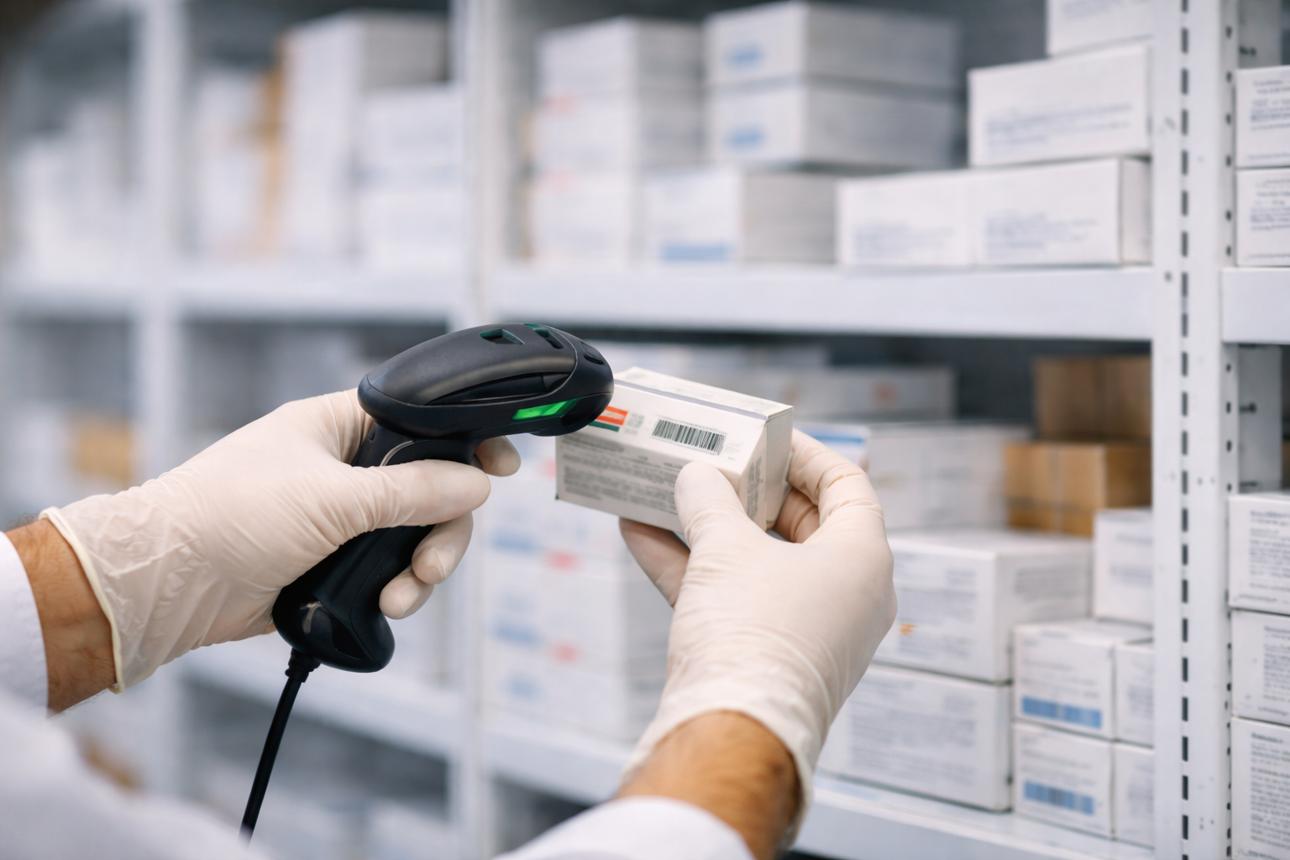
Pharmaceutical and dental products often arrive with manufacturer-provided barcodes. While one barcode may identify the product, another may encode additional information such as product identification, batch number and expiry date. GloudOne can recognise supported OEM barcode formats and connect the scanned information with the product master, inventory transactions and batch traceability records.
The Business Challenge
A pharmaceutical distributor handles products from multiple manufacturers. Each OEM may follow a different barcode structure, and some packages carry separate codes for product identification and batch-related information.
When warehouse employees manually enter batch numbers and expiry dates, mistakes can occur during goods receipt, picking, invoicing, stocktaking and returns. Creating and applying another internal barcode to every package introduces additional work and can complicate traceability.
How GloudOne Addresses It
GloudOne maps supported manufacturer barcode formats to the internal product master, enabling barcode-driven inventory operations with batch and expiry verification.
- OEM barcode mapping: Associate manufacturer product identifiers and barcode formats with the correct internal inventory items.
- Multi-code recognition: Recognise supported product identification codes and extended barcodes containing additional product information.
- Batch identification: Extract and validate batch or lot numbers where the manufacturer’s barcode format provides the information.
- Expiry date recognition: Capture encoded expiry dates and connect them with the corresponding inventory batch records.
- Goods receipt verification: Scan incoming products and record the relevant product, batch and expiry information during receiving.
- Barcode-based picking: Verify that the product and applicable batch selected by warehouse staff match the picking instructions.
- FEFO support: Use expiry information to guide first-expiry-first-out stock allocation where appropriate.
- Stock movement control: Maintain batch identification during internal transfers, warehouse issues and other inventory transactions.
- Stocktaking: Scan products during physical inventory verification to compare actual stock with recorded quantities and batch details.
- Customer returns: Identify returned products and their recorded batch information for inspection, reconciliation and further action.
- Traceability: Maintain transaction references linking received batches with subsequent stock movements and customer deliveries.
- Reduced relabelling: Avoid unnecessary internal barcode printing when the existing manufacturer code provides sufficient verified information.
Management Intelligence
Management can review batch-wise stock availability, approaching expiry dates, inventory ageing, product movement history and batch-linked customer deliveries. Where the necessary information is recorded, traceability reports can help identify customers who received products from a particular batch, supporting faster investigation and recall-related activities.
Expected Business Outcomes
Improved product identification, fewer manual entry errors, stronger batch and expiry accuracy, reduced relabelling work, more reliable picking and stocktaking, better expiry management and improved inventory traceability across distribution operations.
BUSINESS CASE 03 | PHARMACEUTICAL & DENTAL DISTRIBUTION
Continuous Supply. Controlled Collections. Every Transaction Reconciled.
Pharmaceutical and dental distributors maintain continuous supply relationships with hospitals, clinics, pharmacies and healthcare institutions. While deliveries and invoices are generated throughout the month, customers may settle their accounts periodically through bank transfers, cheques or post-dated cheques. GloudOne connects sales transactions, customer receivables, collections, treasury instruments, returns and customer account reconciliation into one coordinated financial management process.

The Business Challenge
A pharmaceutical distributor supplies products to the same customers several times every week. By the end of the month, each customer may have numerous invoices, partial deliveries, returned products, credit notes and payments awaiting allocation.
Some customers issue post-dated cheques against monthly settlements, while others make partial payments or deduct amounts for returned products. When sales, delivery records, returns, collections and cheque registers are maintained separately, reconciliation becomes difficult. Outstanding balances may be disputed, collection follow-ups may be delayed, and management may lack visibility of actual receivables and expected cash inflows.
How GloudOne Addresses It
GloudOne connects customer transactions and collection activities with financial accounting, helping distributors maintain accurate customer balances and a structured monthly settlement process.
- Automatic receivables accounting: Sales invoices create corresponding customer receivables without duplicate accounting entries.
- Customer-wise outstanding: Monitor unpaid invoices, due dates, overdue balances and customer account exposure.
- Monthly customer statements: Consolidate invoices, payments, returns, credit notes and outstanding balances into customer account statements.
- Collection planning: Organise collection follow-ups by customer, due date, outstanding amount and responsible collection personnel.
- Post-dated cheque management: Record cheque numbers, banks, amounts, cheque dates, customer references and maturity schedules.
- PDC maturity monitoring: Track cheques awaiting deposit, deposited cheques, cleared amounts and dishonoured instruments.
- Payment allocation: Allocate customer receipts against individual invoices or agreed monthly settlement balances.
- Partial settlement handling: Manage part payments, pending balances and subsequent collection commitments.
- Customer returns: Record returned products with reference to original sales transactions and route them for inspection and appropriate inventory treatment.
- Credit note management: Generate authorised credit notes against eligible returns, pricing corrections or delivery discrepancies.
- Customer reconciliation: Compare invoices, delivery records, credit notes, receipts and adjustments to identify unresolved differences.
- Customer portal: Provide authorised customers access to invoices, delivery documents, credit notes, account statements and outstanding balances.
- Collection history: Maintain records of collection follow-ups, customer commitments and payment-related communications.
- Cash flow visibility: Include expected customer collections and PDC maturity information in treasury and cash flow reporting.
Management Intelligence
Management can monitor customer-wise outstanding balances, receivables ageing, overdue invoices, monthly collection targets, actual receipts, PDC maturity schedules, dishonoured cheques, pending credit notes and unresolved customer reconciliation differences. Customer account exposure and expected cash inflows can be reviewed together, helping finance and sales teams coordinate collection priorities and credit decisions.
Expected Business Outcomes
Faster customer reconciliation, more systematic collection follow-ups, improved PDC visibility, fewer unresolved account differences, better control over returns and credit notes, reduced manual accounting work and improved predictability of cash collections. Customer portal access can further reduce routine document requests and support transparent monthly settlements.
BUSINESS CASE 04 | PHARMACEUTICAL & DENTAL DISTRIBUTION
Every Doctor Visit Connected to Product Knowledge, Sample History & Sales Opportunities.
Medical representatives play an important role in developing relationships with doctors, dentists, clinics, hospitals and healthcare institutions. GloudOne connects field visits, doctor specialisations, relevant products, sample distribution and follow-up activities through a structured CRM process, giving representatives the information they need while providing management with visibility into field operations.

The Business Challenge
A pharmaceutical or dental distribution company may have several medical representatives visiting hundreds of doctors and healthcare institutions. Each doctor has a particular specialisation, preferred product categories, previous interactions and potential requirements.
Without a centralised system, representatives may depend on personal notes, spreadsheets or messaging applications to remember visit histories and follow-up commitments. Sample distribution may be recorded separately, making it difficult to understand which products were introduced, how many samples were issued and whether subsequent engagement took place.
How GloudOne Addresses It
GloudOne provides a coordinated field CRM workflow, connecting doctor and institution information with product knowledge, representative activities and sample movement records.
- Doctor and institution masters: Maintain structured records of doctors, dentists, clinics, hospitals, departments and healthcare institutions.
- Specialisation mapping: Associate doctors with their medical or dental specialisations and relevant product categories.
- Product relevance: Identify products applicable to a selected doctor’s specialisation and areas of practice.
- Mobile doctor lookup: Allow authorised representatives to search for a doctor and review relevant information before a visit.
- Visit planning: Organise scheduled visits, territory assignments, pending appointments and follow-up activities.
- Visit recording: Capture the date, doctor, products discussed, meeting observations and agreed next actions.
- Sample allocation: Record samples issued to representatives and maintain accountability for sample stock.
- Sample distribution history: Record which product samples were provided to each doctor, including quantities and applicable batch information.
- Previous interaction history: Display earlier visits, products introduced, samples issued and outstanding follow-up commitments.
- Follow-up management: Create tasks and reminders for product discussions, demonstrations, enquiries and subsequent visits.
- Institutional opportunities: Connect relevant enquiries or product interests with the corresponding clinic, hospital or institutional customer records.
- Territory visibility: Monitor representative activities across assigned regions, institutions and customer groups.
- Controlled sample movements: Link sample issues and returns with inventory records and authorised distribution procedures.
- Management reporting: Review visit coverage, follow-up completion, sample utilisation and product engagement by representative or territory.
Management Intelligence
Management can review representative-wise visit performance, doctor coverage, specialisation-wise product engagement, sample distribution, pending follow-ups and institutional opportunities. By connecting field activities with subsequent enquiries and sales transactions where applicable, the business can better understand the effectiveness of its medical representative operations.
Expected Business Outcomes
Better-planned doctor visits, improved representative productivity, more relevant product discussions, stronger sample accountability, consistent follow-up activities, reduced dependence on individual employee records and improved visibility into field sales development. Product promotion and sample distribution remain subject to applicable healthcare regulations and company policies.
BUSINESS CASE 05 | PHARMACEUTICAL & DENTAL DISTRIBUTION
One Product Master. Different Customer Names. Complete Inventory Control.
Pharmaceutical and dental distributors supply products to hospitals, clinics, dental colleges, universities and other institutions. The same product may be identified differently by its manufacturer, the distributor and individual customers. GloudOne connects these different product references to one internal inventory master, enabling customer-specific order processing and documentation without duplicating inventory items.

The Business Challenge
A dental college may order a product using its internal catalogue description, while a hospital may use a different purchasing code for the same item. The OEM may identify that product by its own brand name, model or reference number.
If the distributor creates separate inventory masters for every customer-specific name, stock quantities become fragmented, purchasing becomes complicated and duplicate item records increase. Alternatively, if customer terminology is ignored, purchase order matching, invoicing and institutional reconciliation can become difficult.
How GloudOne Addresses It
GloudOne maintains a single internal product identity while supporting multiple approved names, descriptions and reference codes associated with customers and manufacturers.
- Central product master: Maintain one inventory item for each distinct product and specification.
- OEM product references: Associate manufacturer names, brand names, catalogue numbers and product codes with the internal item.
- Customer-specific product mapping: Record the names, descriptions and item codes used by individual hospitals, clinics, universities and dental institutions.
- Institutional catalogue support: Maintain customer-specific product references for repeat institutional orders.
- Purchase order matching: Identify the correct internal product using the customer’s purchase order description or reference code.
- Sales order processing: Convert customer-specific item references into the appropriate internal inventory items during order booking.
- Document presentation: Display approved customer-specific descriptions and references on sales quotations, order confirmations, delivery notes and invoices where appropriate.
- Inventory consistency: Maintain one stock balance across all mapped customer descriptions.
- Barcode integration: Continue using the correct internal product identity and applicable OEM barcode information for warehouse operations.
- Procurement coordination: Consolidate demand from different institutions against the same internal product for purchasing and replenishment planning.
- Controlled mapping approval: Review and authorise new customer-to-product mappings to prevent incorrect item substitutions.
- Product specification validation: Distinguish genuinely different products, strengths, pack sizes, materials or specifications rather than incorrectly merging them.
- Customer order history: Review previously supplied products using either internal item details or customer-specific references.
- Institutional reporting: Analyse customer demand, product movement and sales performance without fragmented inventory records.
Management Intelligence
Management can analyse demand for the same product across different institutions, identify frequently ordered items, monitor institution-wise purchasing patterns and consolidate procurement requirements. Product mapping records also help identify unmapped customer references and potential duplicate item creation, supporting cleaner master data and more reliable inventory reporting.
Expected Business Outcomes
Fewer duplicate product masters, more accurate institutional order processing, improved purchase order matching, consistent stock visibility, easier customer reconciliation, better procurement consolidation and reduced manual interpretation of customer-specific product descriptions.
BUSINESS CASE 06 | PHARMACEUTICAL & DENTAL DISTRIBUTION
Know What Is Available. Reserve What Is Committed. Procure What Is Needed.
Pharmaceutical and dental distributors receive customer orders for immediate delivery as well as future supply commitments. GloudOne brings together sales orders, stock availability, reservations, purchase requirements and incoming inventory, helping teams make dependable delivery commitments while maintaining control over inventory allocation and procurement.

The Business Challenge
A distributor may receive an urgent hospital order for products available in the warehouse, while another institution places an order for delivery next month. At the same time, the purchasing team may have confirmed incoming shipments, pending supplier orders and products approaching expiry.
Without coordinated reservation and procurement controls, the same stock may be promised to multiple customers. Future orders may unnecessarily block stock required for immediate deliveries, while purchasing teams may not have a clear view of actual shortages and upcoming commitments.
How GloudOne Addresses It
GloudOne separates immediate stock fulfilment from future supply planning while maintaining a consolidated view of customer demand and inventory commitments.
- Real-time stock availability: Review physical stock, reserved quantities and available-to-promise quantities before confirming orders.
- Immediate reservation: Reserve eligible available stock against confirmed customer orders to prevent conflicting allocations.
- Future order management: Record orders scheduled for future delivery without automatically consuming stock needed for current commitments.
- Order classification: Distinguish immediately fulfilable, partially fulfilable and procurement-dependent customer orders.
- Partial stock allocation: Reserve available quantities while identifying the remaining balance requiring replenishment.
- Procurement requirement generation: Consolidate shortages and future customer commitments into purchasing requirements.
- Purchase order linkage: Associate procurement-dependent customer orders with relevant supplier purchase orders.
- Incoming stock visibility: Review expected receipts, supplier commitments and planned arrival dates.
- Allocation on receipt: Identify pending customer requirements when incoming products are received and made available.
- Batch and expiry consideration: Support allocation decisions using product batch information, expiry dates and applicable inventory policies.
- Reservation monitoring: Identify ageing reservations, unfulfilled orders and commitments requiring review.
- Delivery commitment tracking: Compare promised delivery dates with stock availability and procurement progress.
- Exception management: Highlight shortages, delayed supplier deliveries and orders at risk of missing committed dates.
- Purchasing intelligence: Analyse demand patterns, pending commitments, stock coverage and replenishment requirements.
Management Intelligence
Management can review available stock, reserved inventory, future order commitments, procurement-linked demand, incoming purchase orders and expected shortages from a consolidated view. Exception reporting can highlight overdue customer commitments, supplier delays and inventory allocation risks, enabling sales, warehouse and purchasing teams to coordinate their actions.
Expected Business Outcomes
Reduced stock overcommitment, more reliable customer delivery promises, improved coordination between sales and procurement, better inventory allocation, clearer visibility of incoming stock and more effective purchasing decisions. The result is a distribution operation that can respond to immediate customer requirements while planning future supplies with greater confidence.
GLOUDONE | PHARMA & DENTAL DISTRIBUTION
See How GloudOne Can Work for Your Distribution Business
Connect sales orders, batch and expiry tracking, inventory,
medical representative activities, institutional sales,
collections and management intelligence through
one unified business platform.
medical representative activities, institutional sales,
collections and management intelligence through
one unified business platform.